

 5 min read

The Rising Demand for HR Professionals in Saudi Arabia
The HR profession in KSA is evolving rapidly, driven by Vision 2030, workforce localisation policies, and digital transformation. As businesses expand, the demand for qualified HR professionals is rising, making HR one of the most sought-after career paths.
According to ZenHR, HR roles are increasingly important as companies comply with Saudization laws, implement digital HR solutions, and improve employee engagement strategies. Additionally, AI-driven HR technology and HR analytics (Explore: What is HR Analytics?) are reshaping how HR professionals work, creating opportunities for those with specialised skills and certifications.
Key Policies and Trends Shaping HR Salaries in Saudi Arabia
The Ministry of Human Resources and Social Development (HRSD) has implemented several programs and policies that influence HR salaries and employment conditions in Saudi Arabia:
- Wage Protection Program: This initiative ensures timely and accurate wage disbursements, creating a transparent and stable salary structure for HR professionals in the private sector.
- Labour Law and Implementing Regulations: Saudi labour laws define salary structures, employee rights, and fair compensation practices, ensuring standardized wages across industries.
- Saudization and Nitaqat Compliance: Government initiatives requiring companies to employ Saudi nationals impact HR hiring trends and salary competitiveness, particularly in compliance roles. (Download our exclusive guide on Saudization and Nitaqat Compliance to learn more.)
- Digital Transformation & HR Tech: The HR technology market in Saudi Arabia is projected to grow significantly, from an estimated $576.8 million in 2024 to $1.03 billion by 2031, according to BlueWeave Consulting. As businesses invest in AI-powered recruitment, automated payroll, and employee experience platforms, HR professionals with strong tech skills will have higher salaries and career growth opportunities.

HR Salary in Saudi Arabia: A Comprehensive Breakdown
According to GulfTalent, HR professional salaries in Saudi Arabia range from SAR 72,000 to SAR 828,000 per year, depending on experience, title and industry. Salaries in Saudi Arabia are also tax-free, increasing overall take-home pay.
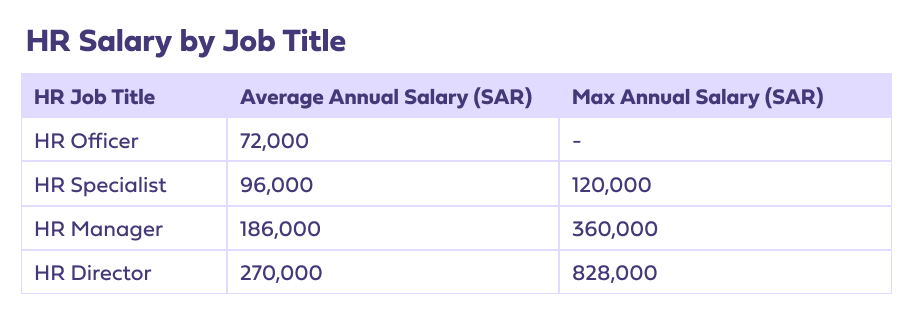
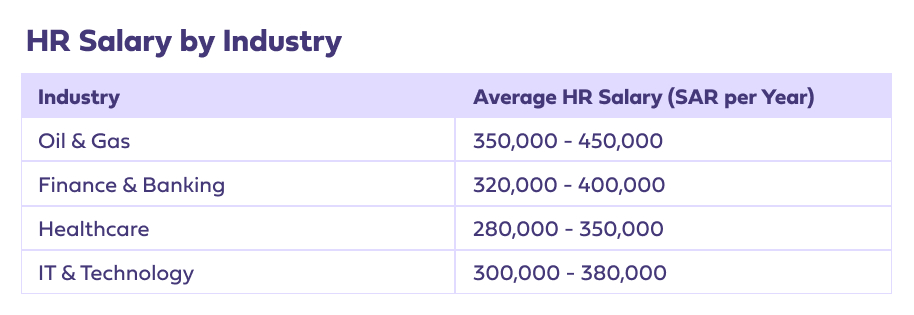
(Combined data from PayScale, Glassdoor, GulfTalent and Nucamp)
Factors Influencing HR Salary in Saudi Arabia
1. Industry & Company Size
Salaries vary significantly depending on industry. Multinational corporations (MNCs) and high-revenue sectors like Oil & Gas, Banking, and Tech offer the most competitive salaries.
2. Experience Level
HR salaries increase significantly with experience, with senior HR professionals earning up to 3.75x more on average, and considerably more at the top end, than entry-level employees.
3. Employer Compliance & Salary Stability
Saudi labour laws and compliance policies play a key role in maintaining fair salaries and employee rights:
- The Wage Protection Program ensures companies adhere to salary commitments, reducing disputes.
- The Labour Law and Implementing Regulations mandate fair compensation practices and protect HR professionals in contract negotiations.
4. Certifications (CIPD vs. MBA: Time and Cost Comparison)
HR professionals looking to advance their careers often choose between an MBA in HR or a CIPD Level 5 qualification. Below is a comparison of the investment required for each option.
Time Commitment
- CIPD Level 5 Qualification: 6-12 months to complete via flexible online learning.
- MBA in HR: 1.5 to 2 years for full-time programs and 2-3 years for part-time or executive MBAs.
Cost Comparison
- CIPD Level 5 Qualification: Costs range from SAR 18,100 – SAR 27,000, depending on the provider. (Explore: How much does the CIPD qualification cost?)
- MBA in HR: Tuition fees can range from SAR 80,000 – SAR 250,000, depending on the university and program.
Return on Investment (ROI)
- CIPD Level 5 Qualification: A cost-effective option, with CIPD’s own research showing certified professionals earn 12% more on average, rising to 36% more for chartered HR managers (CIPD).
- MBA in HR: Higher earning potential at senior levels, particularly for director-track roles. Franklin University’s research found the median advertised salary for HR jobs requiring an MBA ran roughly 28% above those requiring only a bachelor’s degree.
How CIPD Certification Boosts HR Salaries
According to the Chartered Institute of Personnel and Development, CIPD-certified professionals earn on average 12% more than their non-certified peers, a gap that widens significantly at senior levels:
- HR admin-level roles requesting a CIPD qualification pay up to £5,600 (+24%) more than those that don’t.
- HR manager-level Chartered Members can earn up to £17,200 (+36%) more than non-members in equivalent roles.
- Job postings requesting CIPD qualifications have grown 115% over the last decade, faster than demand for many other professional certifications.
- Major employers including Microsoft, Network Rail, BMW, and Santander have specifically requested CIPD-qualified candidates in their job postings.

Why CIPD with Avado?
Our CIPD qualifications are designed to help you stand out in the competitive KSA job market. As the data shows, CIPD certifications are increasingly critical for career advancement and commanding higher salaries in the evolving HR landscape across Saudi Arabia and the GCC region. Explore CIPD courses with Avado
Frequently Asked Questions
What is the average HR salary in Saudi Arabia?
HR salaries in Saudi Arabia range from roughly SAR 72,000 for entry-level roles to over SAR 800,000 for senior HR leadership positions in large organisations, according to GulfTalent.
Does a CIPD qualification increase salary in Saudi Arabia?
Yes. While CIPD’s own salary research is UK-based, the qualification is recognised across the GCC, and internationally, CIPD-certified professionals earn 12% more on average, rising to 36% more at chartered manager level.
Is an MBA or CIPD better value for an HR career in KSA?
CIPD is faster (6–12 months) and less expensive, with strong ROI at every level. An MBA takes longer and costs more but can offer higher ceiling salaries for director-track and executive roles.
Next Steps
HR salaries in Saudi Arabia are among the most competitive in the Middle East, particularly for professionals with certifications, experience, and specialized skills. Speak with your Avado advisor today to choose the right CIPD qualification pathway to achieve your career and salary goals in the Kingdom.